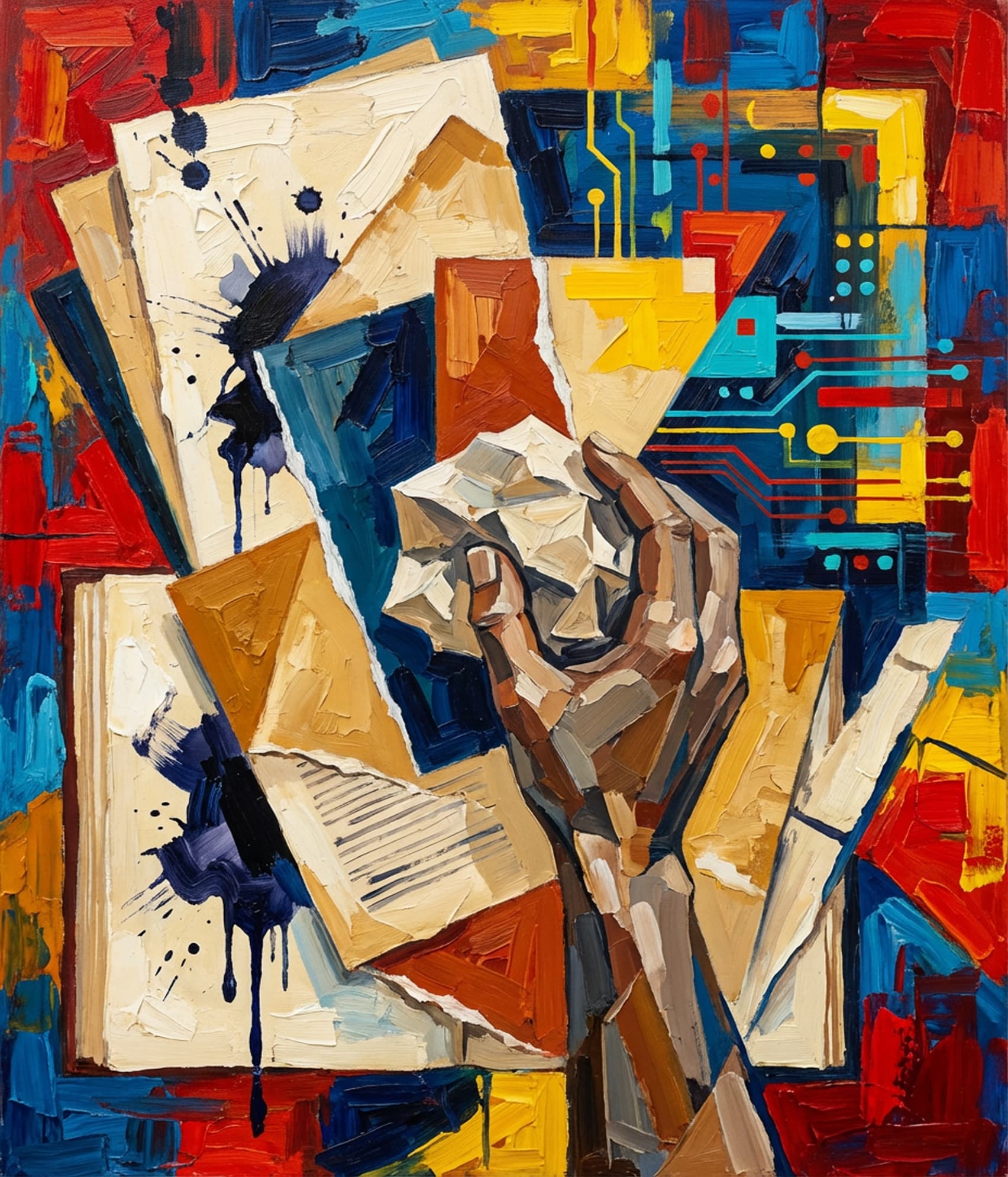
I chose the leak anyway.
Not because I'm skeptical of technology. I love technology more than most people I know. I'm building a company predicated on AI making real estate transactions faster, cheaper, more transparent. I believe in this completely. The traditional process is byzantine, a monument to manufactured complexity. Technology doesn't just make it better. It makes it honest.
And yet I find myself reaching for the analog more and more. The paradox itself is what makes it beautiful. Like words that shouldn't go together but when they do, something hits the soul in a way optimization never could.
Ford brings me drawings. He's six, and he draws spiders. Elaborate, spooky things with too many eyes and legs that curl in ways that suggest movement. He tells me he's going to make a movie one day about the characters he creates. Avery, who's ten and lives for theater, has already volunteered to star in whatever he produces. I watch them hunched over paper, markers squeaking, tongues between teeth in concentration, and I wonder what they're encoding into memory that a screen could never capture.
Reality isn't just what exists. It's what resists.
We're building a civilization obsessed with removing friction. Every product manager, every interface designer is waging war on obstacles between impulse and action. One-click ordering. Frictionless payments. Seamless experiences. The goal is to make every interaction so smooth you don't even notice you're doing it. And in many contexts, this is mercy. This is progress.
But friction is also how you know something costs something.
Your brain doesn't just store information. It stores context. The olfactory bulb connects directly to the hippocampus and amygdala, bypassing rational processing entirely. This is why certain smells don't just remind you of the past. They return you there bodily, recreating moments with all their attendant emotion in ways visual memory never can.
I've spent too much time in hospitals. I know that smell. The antiseptic trying to mask decay, the specific combination of industrial cleaners and fear and fluorescent light that somehow has an odor. It's the smell of watching people fade, of endings I wasn't ready for. But it's also the smell of beginnings. The same sterile rooms where I watched life leave held my children as they arrived. The end of beginnings, in a way. The same scent marking both passages. That smell will stay with me until I'm gone, triggered instantly by a whiff of hand sanitizer or floor wax, carrying both grief and joy in the same molecular structure.
Screens have no smell. No texture. No resistance. They exist in permanent present tense, refreshing endlessly, never aging, never bearing marks of use. This makes them powerful. It also makes them incomplete.
Compare reading a physical book to reading on a Kindle. The e-reader is functionally superior in almost every way. Lighter, backlit, holds thousands of books, adjustable text. I use one. I love mine. But when I finish a book on Kindle, I don't remember it the same way. The experience doesn't encode with the same fidelity because there was nothing sensory to anchor it. You knew you were thirty-four percent through an abstract container of data, but you were nowhere in particular.
The printed book demands engagement with its materiality. You feel the weight of how much you've read and how much remains. The spine cracks. Pages have texture, some smooth, some rough depending on paper stock and how many hands held them before yours. There's a scent that changes as the book ages. These aren't bugs in the system. They are the system.
This is the pattern we keep discovering: when everything becomes frictionless, friction becomes valuable. When everything becomes instant, patience becomes powerful. When everything becomes perfect, imperfection becomes interesting.
Spotify didn't kill vinyl. It made people realize what vinyl offered that streaming didn't. The crackle and pop aren't impediments to the music. They're proof of physical interaction, a needle tracing a groove in a specific moment in time. High-resolution photography made people fall back in love with film. Text messages made handwritten letters precious. The best technology doesn't eliminate the analog. It clarifies what made the analog irreplaceable in the first place.
I think about this in our businesses. Yes, we can eliminate weeks of anxiety and uncertainty. Yes, we can make transactions faster and fairer. But when someone buys a home, they're not buying liquidity. They're buying the particular creak of that floorboard. The way afternoon light angles through the kitchen window. The scent of the deck after rain. These elements won't show up in the appraisal or the algorithm. They only emerge through living, through the accumulated friction of years.
The technology should remove bureaucratic friction while preserving ceremonial weight. Make the process transparent without making it trivial. You can't automate meaning. You can only create conditions where it might emerge.
Efficiency is a wonderful servant and a terrible host. When everything is optimized, moments stop leaving residue. The conversation that becomes a thread becomes a graveyard of half-thoughts, searchable and disposable. Even affection gets flattened into read receipts. The ache you feel isn't regressive. It's your body asking for rituals that cost something.
I write with a Sharpie pen. Whatever notebook I can find, whatever scrap of paper is nearby. Nothing precious about it. The ink bleeds through cheap pages. Notes pile up in random places, some organized, most not. But years from now, those pages will smell like old paper and whatever rooms held them. They'll be archaeological artifacts of thought, bearing physical evidence of the days they witnessed. Ink-stained, coffee-ringed, dog-eared proof that ideas existed somewhere specific, at some specific time. The cloud has no archaeology. It has backups, but it has no scent, no weight, no evidence that time passed and someone cared enough to make marks.
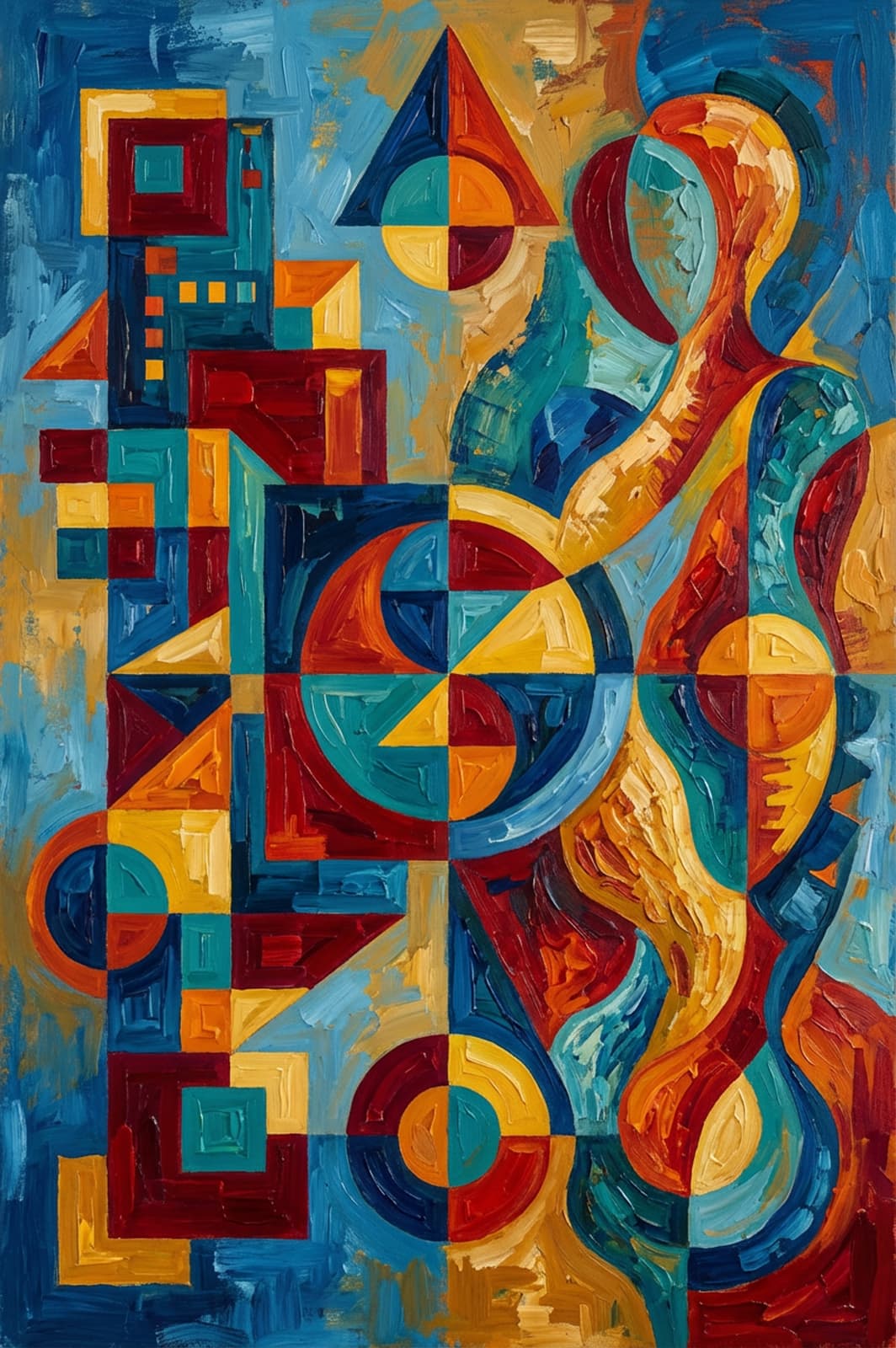
We need both. The reach of digital distribution and the depth of physical presence. The efficiency of AI and the irreducibility of human judgment. The scale of platforms and the intimacy of craft. Let computation multiply reach. Let matter multiply meaning. These aren't contradictions. They're complementary truths about creatures who are simultaneously information processors and bodies moving through space.
The screens will get better. The AI will get smarter. The interfaces will get more seamless. Progress marches on, as it should. I want this. I'm building toward this. But the future, if it's any good, will still smell like something. Like paper and ink. Like wood and coffee. Like the particular combination of scents that mean home, that trigger memory, that remind us we're not just processing information but living in bodies that know things minds can't articulate.
Progress isn't about eliminating friction. It's about eliminating the wrong friction while preserving the friction that makes us human. Print the thing you claim to care about. Sign your name in ink that bleeds a little. Send a letter that takes three days. Scribble notes on whatever paper you can find. Let objects become evidence that you meant it.
The pen still leaks. I still choose it.
Because imperfection is where the humanity lives. Because the paradox of loving both the speed of light and the speed of touch is what makes us whole. Because the future deserves to smell like more than ionized air and optimized existence.
It deserves to smell like paper. Like possibility. Like something real happened here.